Pure ‘Like a Virgin,’ Madonna too will be in awe of this boy – Beyond Bollywood
Lakshmipriya Devi’s BAFTA-winning Manipuri film is a must-watch for the entire family, and should have been Oscar-bound. Its fine universal plot and standout performances, particularly by its leading child artistes Gugun Kipgen and Angom Sanamatum, grip your imagination.
Rating: ⭐️⭐️⭐️⭐️ ( 4/ 5)
By Mayur Lookhar
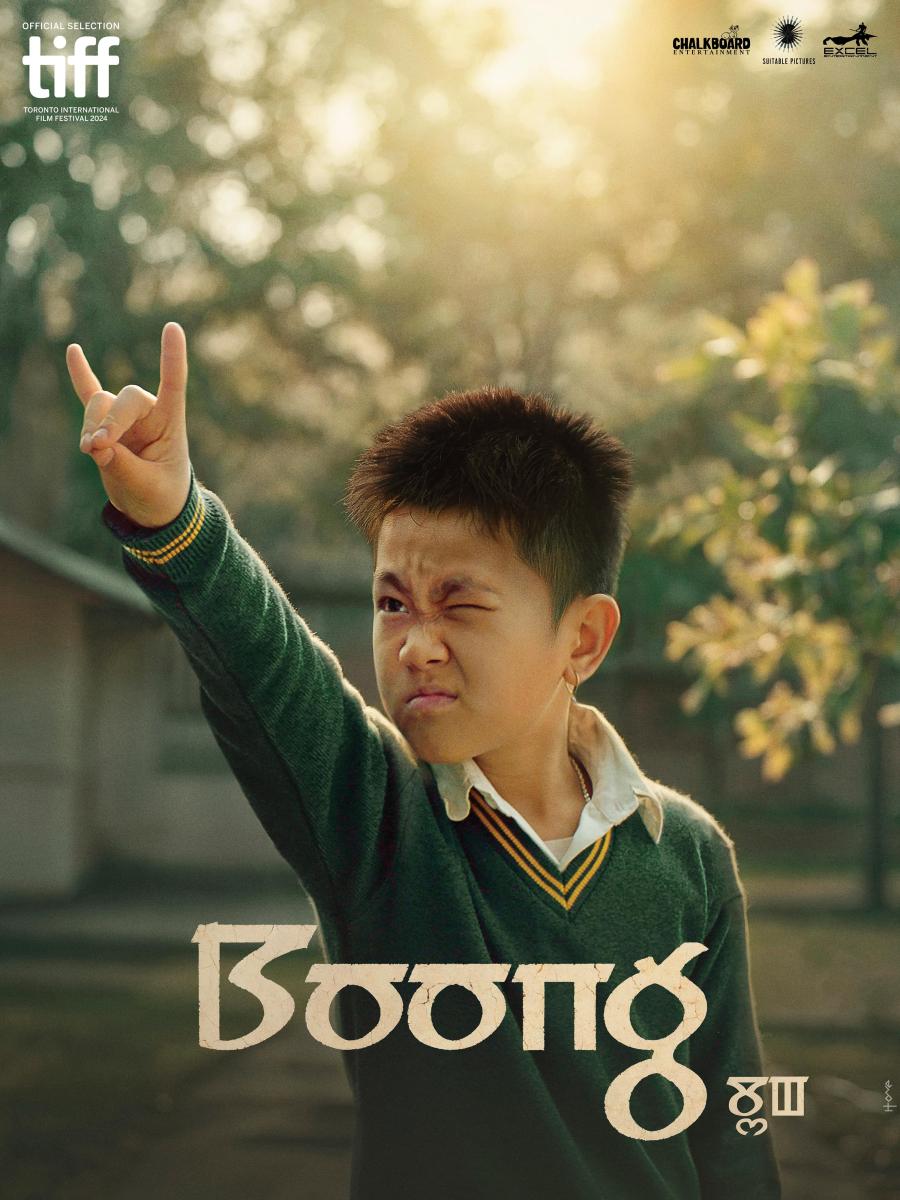
Rarely does the opening shot of a film become its poster. Here’s a little boy who initially appears to be flaunting a classic rock and roll hand sign or “the horns.” The next moment, he pulls out a slingshot, spins around, and fires a pebble/stone at the monument gate of his school. He repeats the process until the monument gate reads ‘Homo Boys,’ The boy and his bestie run away. We’re in a rural village near Imphal, Manipur. Given the location, It would be easy to label the boy’s act as rebellion, but it is not.
Lakshmipriya Devi left Manipur at age 10. After studying in Delhi, she migrated to Mumbai and built a career in Bollywood as an assistant director on films like Lakshya (2004), Swades (2004), Rang De Basanti (2006), Talaash (2012), and the series Dahaad. With Boong (2025), she makes her directorial debut. The inspiration for Boong stemmed from the personal loss of her grandfather, who was exiled to Myanmar.
Story
Boong (meaning boy in Manipuri) is a heartfelt slice-of-life tale of a 10-year-old boy who sets out to surprise his mother by searching for his missing father.
Fearless L. Brojendro Singh aka Boong (Gugun Kipgen) takes his bestie Raju Agarwal (Angom Sanamatum) and embarks on a journey that leads them to the border town of Moreh.
Screenplay and Direction
Veteran actor Kamal Haasan has often said cinema has no language. This rings true for films like Boong, which strike a deep emotional chord, where language becomes redundant, shining through its heartfelt universal story, subtle social message, the innocence of Boong and the other children in the region. Here’s a family film that, without spelling it out, sheds light on local culture, its beauty, strong women, gender and regional issues. Just the places Boong visits tell a subtle story of regional conflicts. At its core, though, this is an endearing family tale, one that dreams of childhood without borders. What’s that Javed Akhtar song from Refugee: “Panchi nadiyan, pawan ke jhoke, koi sarhad na inhe roke” just add childhood too.
While the universal plot, and characters are engaging, the quality English subtitling also goes a long way in building constant engagement.
Performances
Based in Delhi for the past three years, young Gugun, now 13, found his role in Boong to be a return to his roots, his native land and his mother tongue, Meiteilon, something that perhaps started to feel distant amid Delhi’s many dialects. He was only ten when he shot for Boong. One look at him and you understand why Lakshmipriya Devi chose Gugun as her Boong. Innocent, handsome, curious, and mischievous – he embodies it all. From that very first slingshot scene, you can’t help but fall in love with this little boy. His distinctive aim (the horns), spin, and fire, actually celebrates the grace of the dancing deer, Sangai (Manipur’s official state animal) and also the local martial arts Thang-Ta.
More than pain, Gugun brilliantly embodies Boong’s curiosity and inquisitive spirit in his search for his father. The few years spent with him, L. Joykumar Singh taught his son how to wield the slingshot, and passed down his love for Madonna. The pop icon’s chartbuster Like a Virgin has stayed with him. For a schoolboy whose English isn’t great, it begs the question: how has Boong memorized Like a Virgin by heart? Hey, haven’t we all done that in school? Rest assured, if the pop diva watched the film, she’d become a fan of this little Boong too.

It’s his friendship with Raju, though, that forms the most memorable part of Boong. One child missing his father, the other never knew his mother. A Raju is a friend through thick and thin. Their early conversations circle around Madonna, then shift to cute arguments over and with Julianna (Nemetia Ngangbam), the class’s most-talked-about girl. How often do certain friendships begin on a sour note, only to grow thick as thieves over time? Kipgen, Sanamatum and Ngangbam are all fine natural child artistes.
Boong and Raju have their odd heated arguments too, here the insider-outsider debate emerges, handled so innocently. Upset, Boong hurls “outsider” barbs, to which Raju retaliates with typical Northeast Indian stereotypes. For a change, it’s the majority made to feel what it’s like to be on the other side. The best part, though, is their reunion: the duo laughs it off, saying they don’t mind the silly jabs and promising nothing will ever separate them. If kids can have such an attitude, why do grown-ups draw fists and guns to resolve disputes?

Bala Hijam Ningthoujam is a respected Manipuri actress. Like most in this film, we’re introduced to her talent, and she impresses mightily with her nuanced performance. While people around her mock her hopes, Mandakini refuses to believe her husband is no more. Lakshmipriya Devi has said Manipuri women are strong, and Mandakini stands as a proud example. She feels lonely at times and sheds a few tears. There’s grief but no misery here. Mandakini is determined to fight every challenge life offers. Perhaps the understated aspect is Meitei culture, particularly the strong faith in its Hindu roots. Bala Hijam has a gifted screen presence, backed by a brilliantly intense performance.
A word of appreciation for this little child artist who emerges at the business end. Named Fary Khoirom, she brings a near-divine presence.
Music and Technical Aspects
A Manipuri film naturally beats to local tunes. The local Holi dance, then the celebratory drums in a death ritual, has its own charm too. Yes, there’s a Madonna reference, but the true sound of music emanates from this humble trans artist JJ (Jenny Khurai), reflecting the film’s inclusive spirit and rainbow message. Credit to Zubin Balaporia and scientist-turned-folk singer Akhu Chingangbam, the architect of Boong’s original score.
Lakshmipriya Devi is proud of her land, and she and her cinematographer Tanay Satam capture its accordingly, revealing its natural beauty, but the visuals also speak the challenges, economic deprivation of the land.
Final word

One is baffled how a film good enough to win a BAFTA (Best Children’s and Family Film) wasn’t India’s official entry to the Oscars. The humble Lakshmipriya Devi quickly disagreed, saying Neeraj Ghaywan’s Homebound was far better and truly deserving. While Homebound failed to win or even earn a nomination, Lakshmipriya Devi’s humility contrasts sharply with the 2013 backlash, when Anurag Kashyap’s co-production The Lunchbox, distributed by Karan Johar, was snubbed in favor of the deserving Gujarati film The Good Road. Well, that is a Manipuri for you – all humble and classy.
Boong is Lakshmipriya Devi’s heartfelt celebration of her land and roots. Interestingly, it marks a Northeast reconnect for producers Shujaat Saudgar and Farhan Akhtar since Rock On 2. Given the tragic times Manipur has endured, Boong cannot heal those wounds, but it serves as a humble reminder that peace and family are humanity’s most treasured possessions.
Boong had a limited theatrical release in September last year. Now buoyed by its historic BAFTA win, the film gets a re-release starting March 6.
Video review below.
Publisher: Source link