“No film industry can survive on tentpole films alone” – Bayaan director Bikas Ranjan Mishra
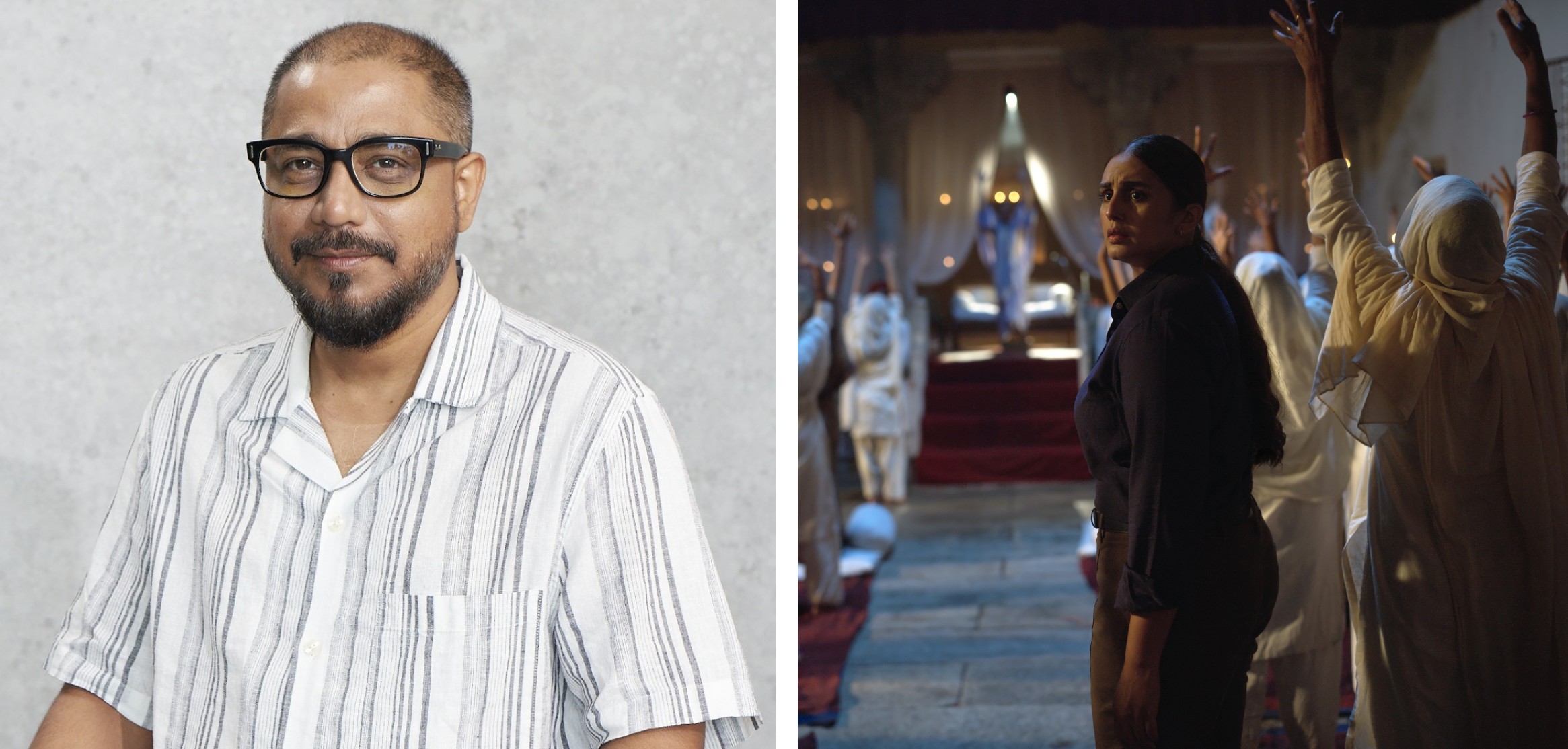
Bikas Ranjan Mishra waited nearly a decade to direct his second feature film. After making his debut with ‘Chauranga’ (2016), an acclaimed drama that examined caste violence, Mishra returns with ‘Bayaan’, an investigative thriller led by Huma Qureshi. The film had its world premiere at the Toronto International Film Festival, later screened at the Busan International Film Festival and is next set to play at SXSW London on June 3, 2026.
In this conversation, Mishra reflects on the long journey of making ‘Bayaan’, collaborating with Huma Qureshi and producer Shiladitya Bora, the changing landscape for small and mid-budget cinema, the role of film festivals and why he believes stories should challenge, rather than simply reaffirm, one’s worldview.
‘Chauranga’, your debut feature-length film, released in 2016. In these ten years, one has seen you write a few films, direct cine-plays and do other work. However, ‘Bayaan’ is your second feature film as a director. And, it comes a decade after your first film. Why did it take you so long to make another feature film?
Making any film is difficult. What is even harder is making the film you truly want to make. I was very clear that ‘Bayaan’ had to be my next feature. Over the years, I had opportunities to direct commissioned projects for various production houses, but I held on to this story. Once I began writing ‘Bayaan’, it completely consumed me. I made a conscious decision that I would not direct another feature until I had made this film.
I had several other ideas, but I did not actively pursue or pitch them. Some people may call that stubborn, even foolish, but I did not want to dilute my focus. I wanted to give myself fully to this one story. Of course, one also has to survive. So during this period, I continued writing for others. But emotionally and creatively, I was living with ‘Bayaan’ for years.
The film, from what one hears, is about the misdeeds of an individual who operates like a Godman and how a cop tries to bring him to justice. Was there any fear in your mind about touching upon a sensitive subject like this in the current socio-political climate?
I began working on ‘Bayaan’ in 2017. Since then, we have seen a number of films and shows explore similar themes, but this film approaches the subject very differently. It is inspired by real events, and what drew me to it was not just the immediacy of the issue, but the deeper questions it raised about power, belief and institutions.
Personally, I never felt fear or apprehension about making the film. But I certainly encountered hesitation from others. Some producers I approached were enthusiastic initially, but at some point in the conversation, anxiety would creep in. There was always a concern about how the subject might be received.
I experienced something similar with a few actors as well. They responded strongly to the script, but were uncertain about stepping into this world because of the sensitivities surrounding the subject. In many ways, ‘Bayaan’ exists because of Shiladitya Bora. We have been friends for a long time, and he understood exactly what kind of film I wanted to make. Had I made it with someone else, there may have been pressure to sanitise the story or soften its edges. It might have become a very different film.
Huma Qureshi plays a cop in the film. How was the experience of working with her?
Working with Huma was a wonderful experience. Films like ‘Bayaan’ are not made on conviction alone. You need people who genuinely believe in the story and are willing to stand by it. Huma was one of those people. In many ways, ‘Bayaan’ could not have been made without her. Along with Shiladitya Bora, she played a crucial role in the film coming together.
I first met Huma in Los Angeles in 2019 during the Global Media Makers residency, a six-week programme organised by Film Independent and the US State Department. I was there with ‘Bayaan’, which was still in development at the time. We spent those weeks interacting with writers, directors and mentors who read our scripts and offered feedback.
I had shared the one-line idea of the film with Huma then, and she immediately connected with it. She told me, “Whenever the script is ready, send it to me.” When I eventually did, she responded very strongly to it.
What stayed with me throughout the process was the sincerity of her commitment. She did not approach the film as a star vehicle or as an obligation. She believed in the material and stood by the film through a long and difficult journey of getting it made. That kind of trust means a great deal to a filmmaker.
How was the experience of working with Shiladitya Bora and Platoon One Films?
Shila often jokes that I am his oldest friend in the Hindi film industry, and in many ways, our journeys have unfolded in parallel. I have known him since the time he organised a short film competition in Ahmedabad, while I was running DearCinema.com, a platform dedicated to independent cinema. We were introduced through film critic Utpal Borpujari. At the time, I was writing about independent cinema and programming for MAMI, while Shila was involved with the Ahmedabad International Film Festival. In different ways, both of us were trying to build meaningful spaces around cinema.
Over the years, our friendship deepened. When he moved to Mumbai, we began meeting more often. Later, when he headed Drishyam Films, they distributed my debut feature, ‘Chauranga’. So there has been a long history of trust and shared sensibilities between us.
With ‘Bayaan’, that trust became especially important. Shila instinctively understood the film and backed it without asking me to compromise on what I wanted to say. That kind of support is rare.
In 2023, we travelled across Rajasthan during the recce, often with cinematographer Udit Khurana and Shilpi, who later designed the costumes for Bayaan. We travelled by train, carried food with us, tried to keep costs low and put as much money as possible on screen. At times, it genuinely felt less like work and more like a group of people coming together to make something they deeply believed in.
What I value most about Shila is that while he is a sharp producer, he is equally driven by a deep passion for cinema. For some people, filmmaking is primarily a business. For him, it is also deeply personal. Everyone involved wanted to make a film we could stand by with pride.
Where did you shoot the film?
The film was primarily shot in Kishangarh, Rajasthan, across different parts of the city. Interestingly, Kishangarh was the very first place we visited during our recce. We found several locations that felt right for the world of the film, but we were also cautious. We wondered if we were arriving at a decision too quickly, so we continued travelling across Rajasthan, exploring other towns and cities.
In the end, we kept returning to Kishangarh, both physically and emotionally. We realised it offered exactly the texture and atmosphere the film needed. The landscape, the architecture and the mood of the place all felt deeply aligned with the world of ‘Bayaan’.
Chandrachur Singh as the Godman was a very interesting casting choice.
The credit for that casting really goes to Rahul Tanwar, the casting director on the film. He was the one who first suggested Chandrachur ji for the role.
Our first meeting happened over Google Meet. He lives in Gurugram, and the moment we saw him on screen, there was an immediate sense that he carried the presence of the character. We barely had to alter his look. It was more a matter of finding the right costume and texture for the part.
What struck me most was how instinctively he connected with the material. During our very first meeting, he said he wanted to do the film. I offered to send him the script before he made a final decision, but he smiled and said, “You narrated it so well, I already understand the film.”
He is an extremely thoughtful and warm person, with a remarkable sense of curiosity. When you spend time with him, he has endless stories to share. At the same time, he is deeply committed to the work. It was genuinely a pleasure collaborating with him.
‘Bayaan’ premiered at the Toronto International Film Festival. It has also been shown at the Busan International Film Festival. Now, with the film about to be screened at SXSW London, do you expect a new set of audience to discover it?
Absolutely. Every festival brings a different audience, and with that, a different way of engaging with the film. What makes SXSW London particularly exciting is that it is not just a film festival. It brings together cinema, music, technology and ideas, which creates a very distinct cultural energy around it. This is also the second time SXSW is being held in the UK, so there is a sense of newness and curiosity around it.
Toronto, Busan and SXSW all attract very different audiences. Toronto, for instance, has a large South Asian diaspora, while Busan is culturally very different and offers a completely different context in which people encounter the film. That is one of the most rewarding things about festivals — you begin to understand how the same story travels across cultures and resonates in unexpected ways.
I have actually never experienced London beyond Heathrow Airport (laughs). ‘Chauranga’ screened there years ago, but I could not attend. So, if my visa arrives on time, I am looking forward to finally being there with ‘Bayaan’.
What are some of the advantages of showcasing one’s film in festivals?
Film festivals offer several important advantages, especially for independent films.
The most valuable part, for me, is the opportunity to interact directly with audiences. You get to experience how people are responding to the film in real time, what moves them, what stays with them and sometimes even what surprises them. That kind of feedback is invaluable because filmmaking is usually such a solitary process.
Festivals also help create awareness around a film. You engage with the media, participate in conversations and, by the time the film eventually reaches a wider release, there is often already a community of people who are invested in it and willing to champion it.
There are practical advantages too. Festivals can open doors to distribution, collaborations and future opportunities. Very often, the people you meet there — whether producers, programmers or fellow filmmakers — become part of your creative journey in unexpected ways.
At their best, festivals create a space where films can travel, find their audience and begin conversations that continue long after the screening is over.
When is the film expected to release in India?
We are currently in discussions about the release strategy for ‘Bayaan’: both in terms of timing and format. The plan is for the film to release in the second half of this year.
At the moment, we are still evaluating what would serve the film best. Whether it releases theatrically or on a streaming platform will depend on those conversations. We want to make sure the film reaches the widest possible audience in the most meaningful way.
For us, the priority is to find the right home and the right audience for the film.
In an interview, you have stated that the film explores the relationship between truth and power. Can you elaborate on that?
When you are part of a system, you want to believe in it. You want to do your work with honesty, integrity and a sense of purpose. But what happens when you realise that the system itself is making it difficult for you to do the right thing? That tension interested me deeply.
Every society operates through a mix of written laws and unwritten rules. The written ones are formal, but many social realities are shaped by convention, belief and power structures. Often, conflict emerges between what the law says and what society is willing to accept.
At its core, ‘Bayaan’ explores that tension. Huma’s character is someone who believes in institutions and wants to do her job sincerely. She comes from a relatively privileged background in Delhi and finds herself posted to a small town in Rajasthan, navigating an unfamiliar world and its invisible power dynamics.
She becomes aware that something is deeply wrong, but suspicion alone is not enough. In a system governed by procedure, she cannot move forward unless someone comes forward with a bayaan — a statement. That one act of speaking the truth becomes the key to challenging power.
For me, the film is ultimately about what it takes to speak up, and what happens when truth collides with entrenched systems of belief and authority.
In recent times, there has been a lot of chatter around the industry being more interested in investing in tentpole, commercial films and sidelining smaller films.
I see this as a cyclical phase rather than a permanent shift. Every industry goes through periods where it leans heavily towards spectacle and scale. But no film industry in the world can sustain itself on tentpole films alone.
There are fifty-two Fridays in a year. You cannot fill all of them with big-budget spectacles. The long-term health of any film industry depends on small and mid-budget films doing well, because that is where new voices emerge, risks are taken and experimentation happens.
If you look at many of our biggest stars, they did not begin with massive tentpole films. Ranveer Singh, for instance, started with a relatively modest film like ‘Band Baaja Baaraat’ (2010). Smaller films often become the space where both talent and storytelling evolve.
Large-scale films have their own place and importance, but by their very nature, they leave less room for experimentation. Smaller films allow filmmakers to take chances, explore complexity and tell stories that may not fit conventional formulas.
I remain optimistic. Audiences eventually respond to good stories, regardless of scale. And as long as there are audiences looking for something honest and distinctive, smaller films will continue to find their space.
One often believes that filmmakers make films or tell stories that align with their ideologies. You have, however, stated that you stay away from stories that are ideologically comfortable for you.
People are far more complex than ideology often allows us to admit. If we begin with an ideology and then construct characters to fit it, the process becomes very comfortable. But comfort rarely leads to interesting storytelling.
For me, characters become compelling when they contain contradictions. Human beings are rarely consistent. Someone may identify as progressive or feminist, for instance, and yet carry deeply conditioned habits or blind spots in their personal life. That contradiction makes them human and, therefore, dramatically interesting.
I am wary of stories that simply reaffirm what I already believe. As a filmmaker, I want to understand people whose worldview may be very different from my own. If I do not attempt to see the world through someone else’s eyes, how do I grow — both as an artist and as a person?
That, for me, is one of cinema’s greatest possibilities. It allows us to transcend our own immediate experience and inhabit somebody else’s emotional world. Through cinema, you can understand what an army officer feels, what drives a scamster or how someone entirely unlike you sees the world. That act of imaginative empathy is deeply important to me.
You grew up in Hazaribagh, a small city in Jharkhand. How were your growing up years like?
I grew up in Hazaribagh, and in many ways, it was a deeply formative place for me. People often assume that growing up in a small town means limited cultural exposure, but my experience was quite the opposite. There was a surprisingly vibrant intellectual and cultural life around me.
As a teenager, I became fascinated by journalism and storytelling. I even dreamt of starting my own newspaper someday. Around that time, a local newspaper called Hazaribagh Times was launched, and I began writing for it while I was still quite young. Through that experience, I found myself in the company of writers, journalists and thinkers who treated me seriously despite my age.
That period exposed me to literature, public debate and different ways of looking at the world. I was also influenced by people like Ramanika Gupta, the writer and political activist, whose work on issues of caste, gender and social justice had a deep impact on me. Reading her writing opened my eyes to realities I may not otherwise have understood so early in life.
Later, journalism brought me to Delhi and eventually Mumbai. But in many ways, the curiosity that drives me as a filmmaker today, about people, power, inequality and human complexity, began in Hazaribagh.
Dear Cinema was very popular back then.
DearCinema.com was an important phase in my life. It was one of the early platforms dedicated to independent cinema in India, and we had some remarkable writers contributing to it.
It was an exciting period because I found myself constantly surrounded by cinema — watching films, writing about them, programming them and engaging with filmmakers from around the world. I learned a tremendous amount during those years.
But after a point, I began to feel restless. I had come to Mumbai to make films, and somewhere along the way, I realised I was orbiting cinema without actually making one. I was deeply involved in the world of films, but not yet telling my own stories.
Around that time, I met a young filmmaker whose journey deeply inspired me, and that became a turning point. I left MAMI, returned to Jharkhand and made a short film called ‘Dance of Ganesha’. We shot it in a village, and the film went on to travel to several festivals. In many ways, that experience gave me the confidence to stop talking about cinema and finally start making it.
When did you get interested in cinema?
My relationship with cinema began very early. There was a theatre in Hazaribagh called Mohan Talkies, very close to our house. My father was their lawyer, and he would often spend his evenings there. If someone came looking for him, we would simply say, “You will find him at Mohan Talkies.”
Cinema, in a way, became part of family life. If my father liked a film, he would take me to watch it. Even when shows were houseful, somehow space would be made for us. At times, I even got to watch films from the projection room with him, which, as a child, felt magical.
In those days, most children had to persuade their parents to let them watch films. In our home, it was a little different. My father would take me to the cinema, but only to watch films he liked and approved of. So cinema never felt forbidden or distant to me. It entered my life quite naturally.
That said, when I eventually said I wanted to work in films, my parents were understandably worried. Like many families from smaller towns, they saw the film industry as uncertain and intimidating. We even had someone in our extended family who had run away to Mumbai to become a film hero. Whenever he returned home, there would be great excitement in the family. But when we watched the film he claimed to be in, we could barely spot him. Only years later, pausing a VHS tape during a dance sequence, did we finally find him in the background (laughs).
Looking back, cinema first entered my life through fascination and proximity, but over time it became something much deeper — a way of understanding people and the world.
Did your parents support you at a later stage?
Yes, they did. But there is also a regret that has stayed with me.
My mother passed away while ‘Chauranga’ was being made, and I lost my father before it released. I had this very simple dream of showing ‘Chauranga’ to him at Mohan Talkies, the same theatre where my relationship with cinema had begun. It felt emotionally important to bring things full circle.
But before that could happen, he fell seriously ill. I was preparing to leave for New York for the film’s premiere when his health deteriorated, and soon after, he passed away.
So yes, they did support me, especially once they saw how serious I was about this path. But I still carry the sadness of never being able to show them my first film. That is something I will probably always miss.
In all these years that you have worked as a filmmaker, was there ever a point when you found it difficult to sustain yourself?
Those phases do come once in a while. Filmmaking, especially independent filmmaking, is not always predictable. There are periods of uncertainty, and then suddenly some work comes along and things begin moving again.
But I also think the landscape has changed significantly over the years. Earlier, there was a feeling that if you wanted to make films, you had to come to Mumbai and somehow find your way into the industry. Today, technology has democratised the process to a large extent. You can make a film from almost anywhere and find ways to share it with the world.
I remember when DSLR cameras became accessible, it suddenly opened up new possibilities for independent filmmakers. Around the same time, stories began emerging of young filmmakers making short films and finding audiences online. That shift was important because it changed how one thought about access.
My advice to young filmmakers is always this: learn a craft that can sustain you. If you become good at editing, cinematography, sound or writing, you can earn a living while continuing to build your own voice as a filmmaker.
Most importantly, one should never be afraid of technology. Cinema has always evolved through technological change. Whether it was sound, colour, digital filmmaking or now streaming platforms, every shift changes how stories are told. Rather than resisting that change, I think filmmakers should learn to adapt and grow with it.
You were a film critic for a very long time. Are you critical about your own work?
Very much so. I think the critic in me never really goes away. Even while I am working, there is often a running commentary in my head. If I am not careful, that voice can become paralysing. At some point, you have to consciously switch it off, because filmmaking requires instinct, risk and momentum. If you keep analysing every decision while making the film, you may never actually finish it.
Making a film is also very different from writing about one. As a critic, you encounter the finished product. As a filmmaker, you are constantly negotiating with limitations: time, weather, budgets, logistics and countless unforeseen challenges. You may imagine one thing and have to reinvent it completely on the day.
In that sense, filmmaking teaches you humility. You realise cinema is rarely created in ideal circumstances. It is created through persistence, through constantly solving problems and through finding ways to move forward even when things do not go according to plan.
Did you face any major challenge while making ‘Bayaan’?
Many. I have lived with this script for nearly seven or eight years, so the journey itself was emotionally demanding. There were long periods when the film simply did not seem like it would get made. I faced rejection from several producers, and when you do not have a producer backing you, it can often feel like you are carrying the entire weight of the project alone.
There are moments when you begin questioning yourself. People around you tell you the film is too difficult, too risky or simply impossible to make. Holding on to your conviction through that phase is perhaps the hardest part.
Things became easier once Shila came on board, not just because he is an experienced producer, but because he was also a genuine collaborator and friend. Even then, the challenges did not disappear. We were making an ambitious film within very real budget limitations.
We were often shooting in villages, forts and remote outdoor locations in extreme heat, mostly for fourteen to sixteen hours a day. The conditions were physically exhausting, but what stayed with me was the spirit of the team. Nobody complained. Everyone believed in the film and kept pushing through the difficulties together.
Looking back, I think independent filmmaking demands a certain stubbornness. If you do not believe in the film completely, it becomes very difficult to survive the process of making it.
Did you have to make some adjustments as you were working with a star like Huma Qureshi?
Not at all. Huma never approached ‘Bayaan’ like a star vehicle. From the very beginning, she saw herself as part of the team.
We were shooting in extremely challenging conditions. I remember filming in a dilapidated structure in a village, a place most of us would probably avoid under normal circumstances. At one point, a bug bit her and her face became swollen. Even then, she never complained.
What stayed with me most was her sense of commitment and generosity. She was dealing with the same heat, difficult locations and long hours as everyone else, and often in even more physically demanding situations. There were scenes where she had to perform in extremely cramped spaces with little ventilation, but she never treated herself differently from the rest of the crew.
I remember one moment during a shoot when she had completed her shot and was about to give a cue to a co-actor. I told her one of the assistant directors could do it instead, but she said, “No, he was there for me. I will be there for him.” That small moment stayed with me because it reflected the kind of integrity and team spirit she brought to the film.
For me, what mattered most was that she genuinely believed in the story. When actors bring that kind of commitment to a film, it changes the energy of the entire set.
What are you doing next?
For the last seven or eight years, I gave almost all my creative energy to one film. It was an intense and deeply consuming process. I feel if I approach things in exactly the same way again, I might completely exhaust myself (laughs).
So this time, I am developing multiple projects simultaneously. Some scripts are already at an advanced stage, and I will soon begin pitching them.
There is one script I feel particularly passionate about, which occupies a thematic space somewhat similar to ‘Bayaan’. Alongside that, I am also developing a political drama, a courtroom drama and a few long-form series.
At this point, I feel excited by the idea of working across different worlds and formats, while still staying drawn to stories that ask difficult questions about people, power and society.
Publisher: Source link

Vibe Movie Review – Bollymoviereviewz
Daayra Movie Review – Bollymoviereviewz
