Stop counting eyeballs, start owning stories – Beyond Bollywood
At FICCI Frames 2026, the Tourism & Culture Minister warns that AI-saturated markets will reward human-made content and audience trust.
By Our Correspondent
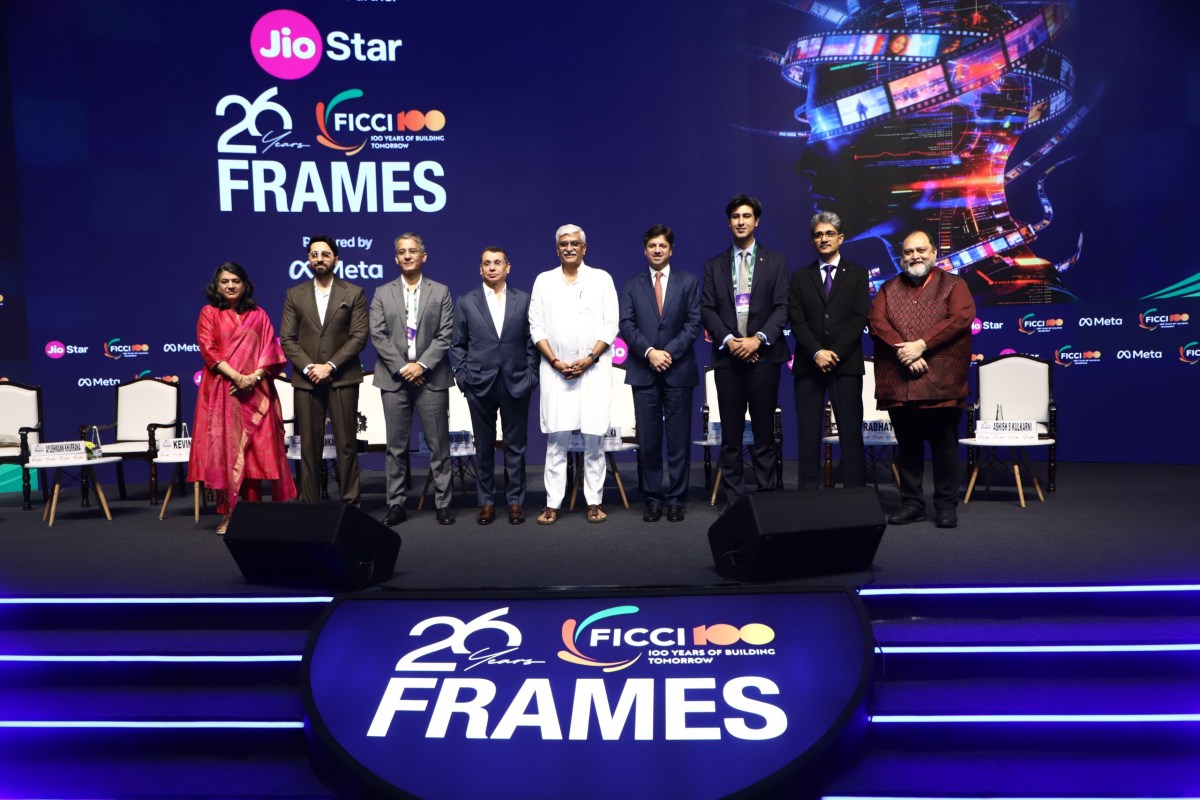
Union Tourism and Culture Minister Gajendra Singh Shekhawat used the opening of the 26th FICCI Frames on Tuesday to push India’s entertainment industry to make the leap from being a giant audience to being a global source of stories.
Shekhawat said the industry’s real difficulty is no longer volume. “It is an era of infinite content, and our biggest challenge is not shortage of content but it is originality and human connection,” he said. Audience trust suffers when both go missing, and he wants it guarded first and foremost. “It is the trust which is invaluable and we need to work to protect the trust on priority,” he added.
He also offered a forecast: within two to three years, he expects viewers around the world to seek out work with little or no AI involvement, minimal filters and a clearly human stamp. New technology should be welcomed, he said, but not at the cost of creative instinct.
Framing India’s advantage, the minister said the country brings context to the table, not just content, thanks to its diversity and centuries-old storytelling habits. “India is the largest center of creativity for the world. This is our creative capital,” he said.
He listed three changes he wants to see. “We must move beyond making India just a content consumer and work together to make it a world leader in content creation and creativity,” he said. The second is a shift in emphasis: “We must move beyond the scale of our audience and build original Indian intellectual property.” The third is a tighter bond between the India viewers see on screen and the one they can travel through, so that stories inspire tourism and tourism creates local prosperity.”
On that last point, he said film shoots and films that spotlight particular locations could have a real impact on tourism. He cited the example of the late Yash Chopra, who was instrumental in popularising Switzerland among Indian audiences. He also mentioned the hugely popular song Teri Ore from Singh Is Kinng (2008), which was shot at the famous pyramids of Giza and led to a surge in tourism from India to Egypt.
Shekhawat also argued that animation, visual effects, gaming, extended reality, virtual production and AI can serve as fresh storytelling tools. He said they could rebuild ancient cities on screen, or reveal the full history of a museum exhibit to younger audiences.
What others said
Prabhat, Additional Secretary in the Information and Broadcasting Ministry, said the government can build institutions, frame policy and open international doors, but creators and companies are the ones who build a creative economy. “India’s next phase of media and entertainment growth must focus on greater investment in original Indian intellectual property and a greater willingness to back new writers, creators, musicians, animators and game developers,” he said.
Actor Ayushmann Khurrana, the convention’s ambassador, spoke about reach. “A story can begin in a small town in India and find an audience anywhere in the world. A creator with a phone can reach millions,” he said.
FICCI president Anant Goenka, who is also vice chairman of the RPG Group, said India should turn scale into lasting value while keeping its stories recognisably Indian. “We should give Indian storytellers the confidence, capital, technology and reach to go global, without removing what makes their work Indian,” he said.
Kevin Vaz, who chairs FICCI’s media and entertainment committee and heads entertainment at JioStar, raised the regulatory question. “As new value pools emerge, we also need to create the right conditions for the industry to grow and innovate,” he said. Broadcasters have long sought forbearance so that innovation has space to develop, and he added, “Self-regulation and strong industry best practices should be at the centre of how we move forward.”
Arjun Nohwar, the committee’s co-chair and Warner Bros. Discover’s managing director for South Asia, said “Creators need the freedom and the runway to experiment.” Investors, he added, “need the conviction to back ideas before the market has validated them,” while policymakers must engage with change as it unfolds.
The session also honoured Uday Shankar, the former FICCI president and JioStar vice chairman, with the Lifetime Achievement Award, presented by Shekhawat for his role in shaping the media and entertainment industry. “Media continues to be a fundamental pillar of society,” said Shankar, while assuring all that he is not going anywhere as his life is nothing without media.
All dignataries also paid a special tribute to former Deputy Secretary General Leena Jaisani, who served FICCI for three decades. Jaisani had passed away early this year.
Publisher: Source link