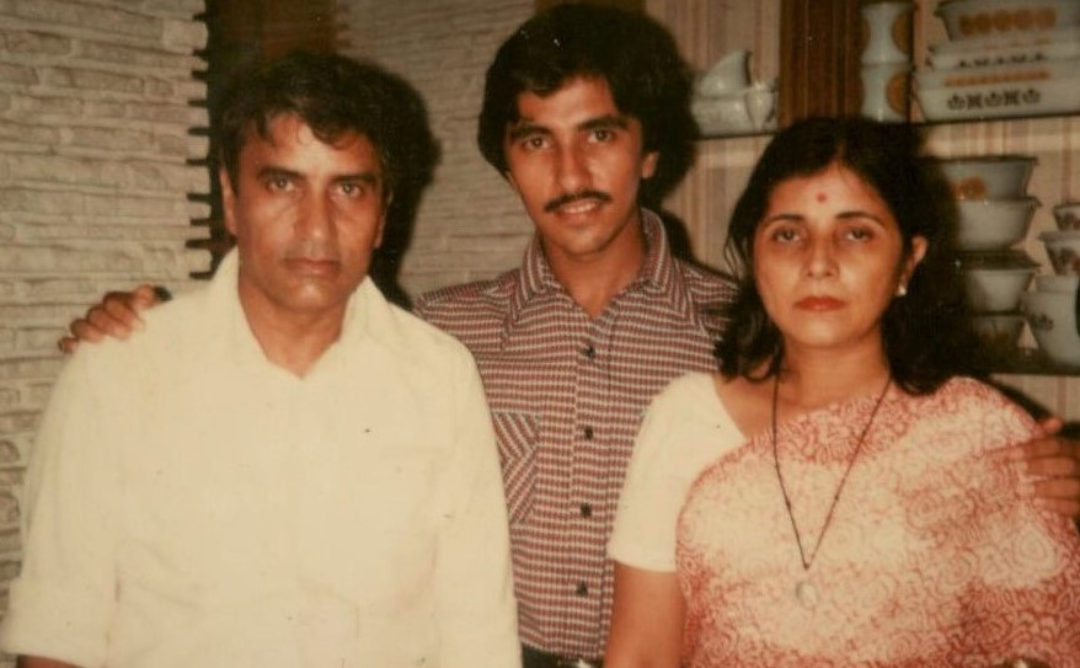
“I am extremely grateful to both my parents for everything and they will always live within me” – Suneel Darshan
When you get into a conversation with Suneel Darshan, one of the things you realize is that he is somebody who is deeply attached to the memories of both his father Darshan Sabharwal and mother Sheela Darshan.
Born on 8 August 1933, Darshan Sabharwal remained active as a producer and distributor in the Hindi film industry for decades. On 31 December, 2011, as he left for his heavenly abode, a large number of people from the industry paid their last respects to him. Despite backing several films as a producer, distributor and financer, he never had an interest in promoting himself or talking about the massive contribution he made to the Industry.
Born on 29 August, 1941, Sheela Darshan, the first-born of late director Nanabhai Bhatt and Shirin, was a highly cultured lady who preferred to be a homemaker. She lent the kind of support that eventually and along with her husband, shaped the careers of her sons Suneel and Dharmesh. She breathed her last on May 7, 2008.
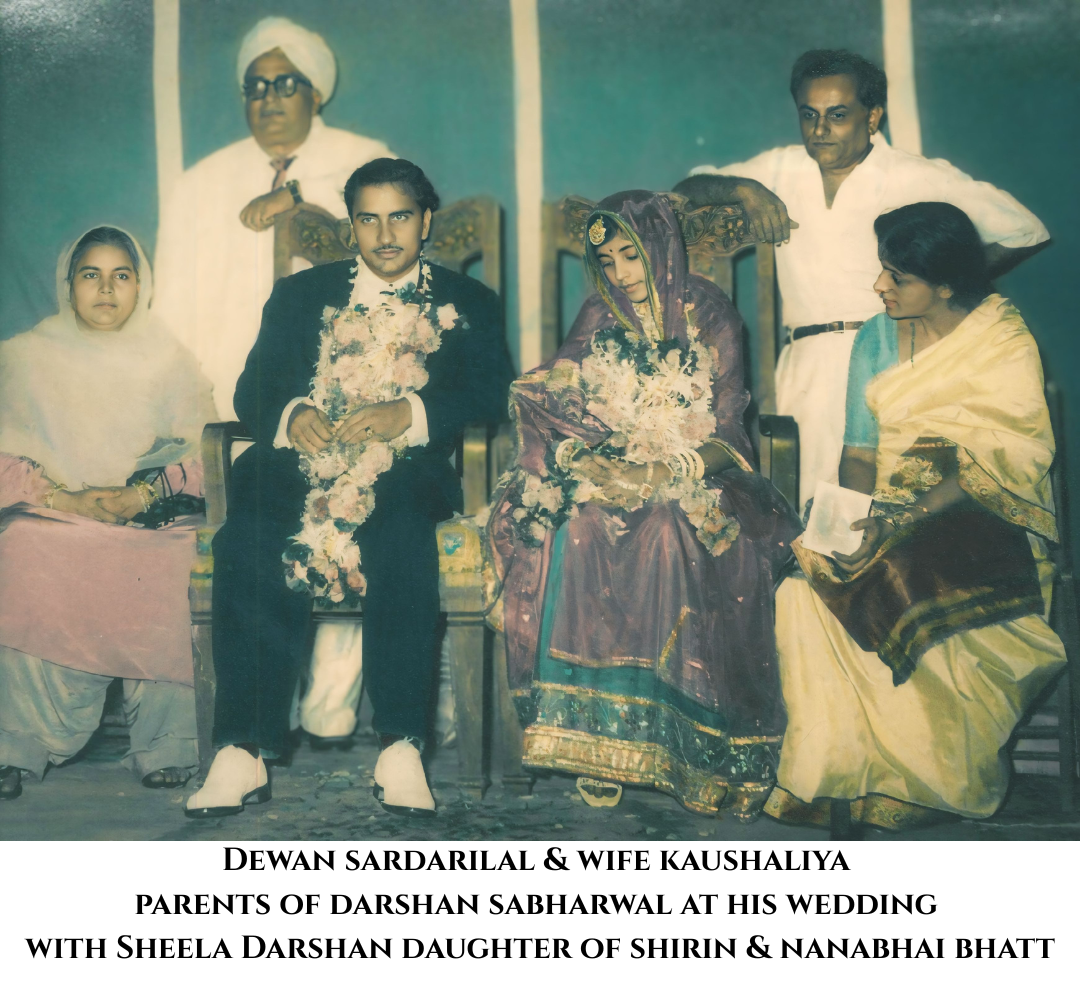
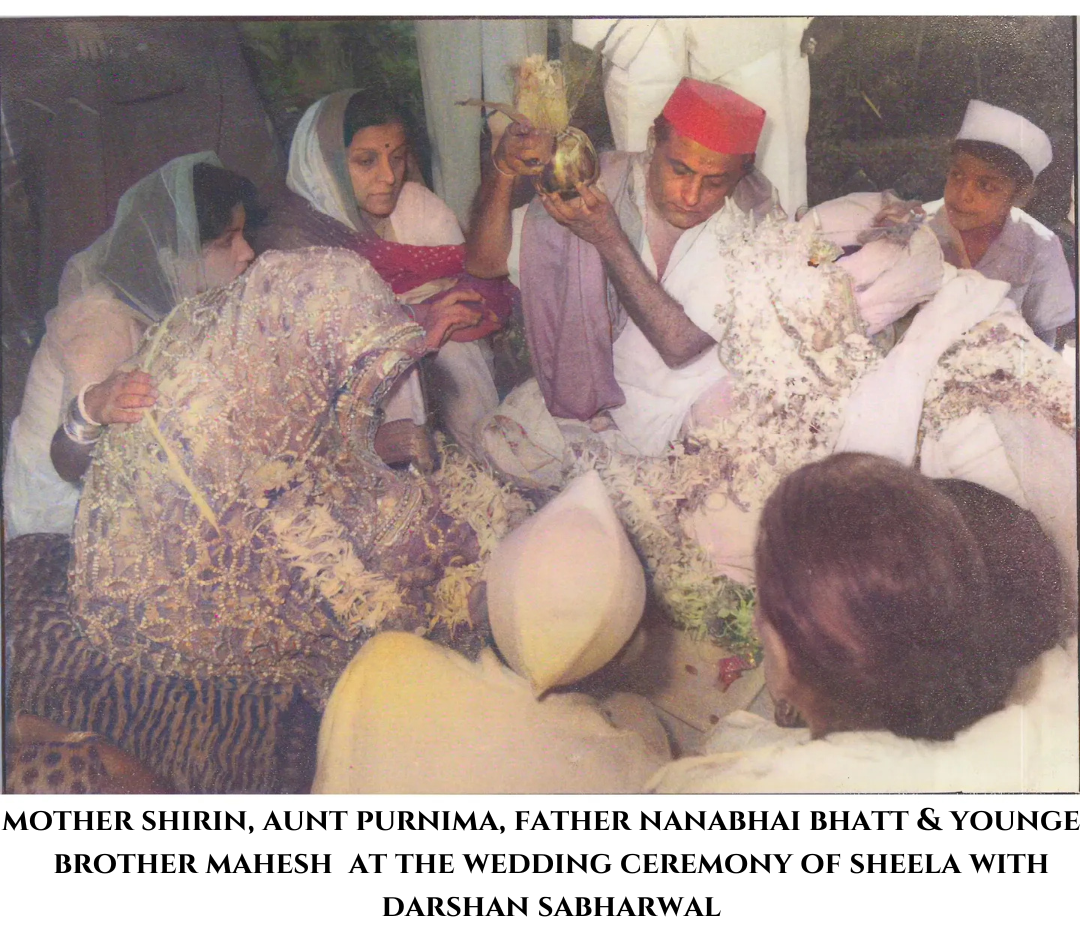
Darshan and Sheela had tied the nuptial knot on 1 December, 1957. Though neither of them is present in flesh and blood today, Suneel makes it a point to celebrate their wedding anniversary by praying for their souls.
On this very special day, Suneel revisits the memories of his beloved parents and the kind of role they played in his life.
Your grandfather Diwan Sardarilal Sabharwal was a legal solicitor whose interest in cinema drew him towards it. Do you remember any of your interactions with him as a child?
No, I was just two years old when he passed away. An advocate with a passion for cinema, he headed both, the legal and production department of Pancholi Studios in Lahore which was owned by renowned filmmaker Dalsukh M. Pancholi. The studio produced ‘Khazanchi’ (1941) which was the biggest hit in the pre-independence era. My grandfather also acted in this particular film. Those like him, who witnessed the partition, went through a lot of trauma. My father relocated a while before my grandfather did. At 14 years of age he travelled through 38 miles of human carnage from Lahore to Amritsar, then Delhi thereafter to Lucknow where he lived with his aunt for a while. He studied at Kalwin’s College and to support himself financially, he started working part-time at All India Radio in Lucknow. He would tell me how music was being recorded in that era (the late 1940s). They did not have modern recording studios then and songs would be recorded late at night to ensure there is pin-drop silence all around for clarity in the singer’s vocals.
It was in Lucknow that he met two like-minded friends, one of them was Khayyam saab, who, of course, went on to become a legendary music composer. My father, Khayyam uncle and the other friend took a train and came to Mumbai to try their luck in cinema.
Your grandfather had produced ‘Teri Yaad’, which was the first film to have been produced in Pakistan after the partition.
That’s right! The film featured Nasir Khan, Dilip Kumar’s brother, in the lead role. After the partition things got worse to survive in Lahore and however reluctant about leaving Lahore as this was the city he was born and grew up in, he had to migrate to Bombay in 1951. The government of Pakistan awarded him a National Award posthumously in 2002, an honour shared by India’s ex-prime minister Morarji Desai and the legendary actor Dilip Kumar.
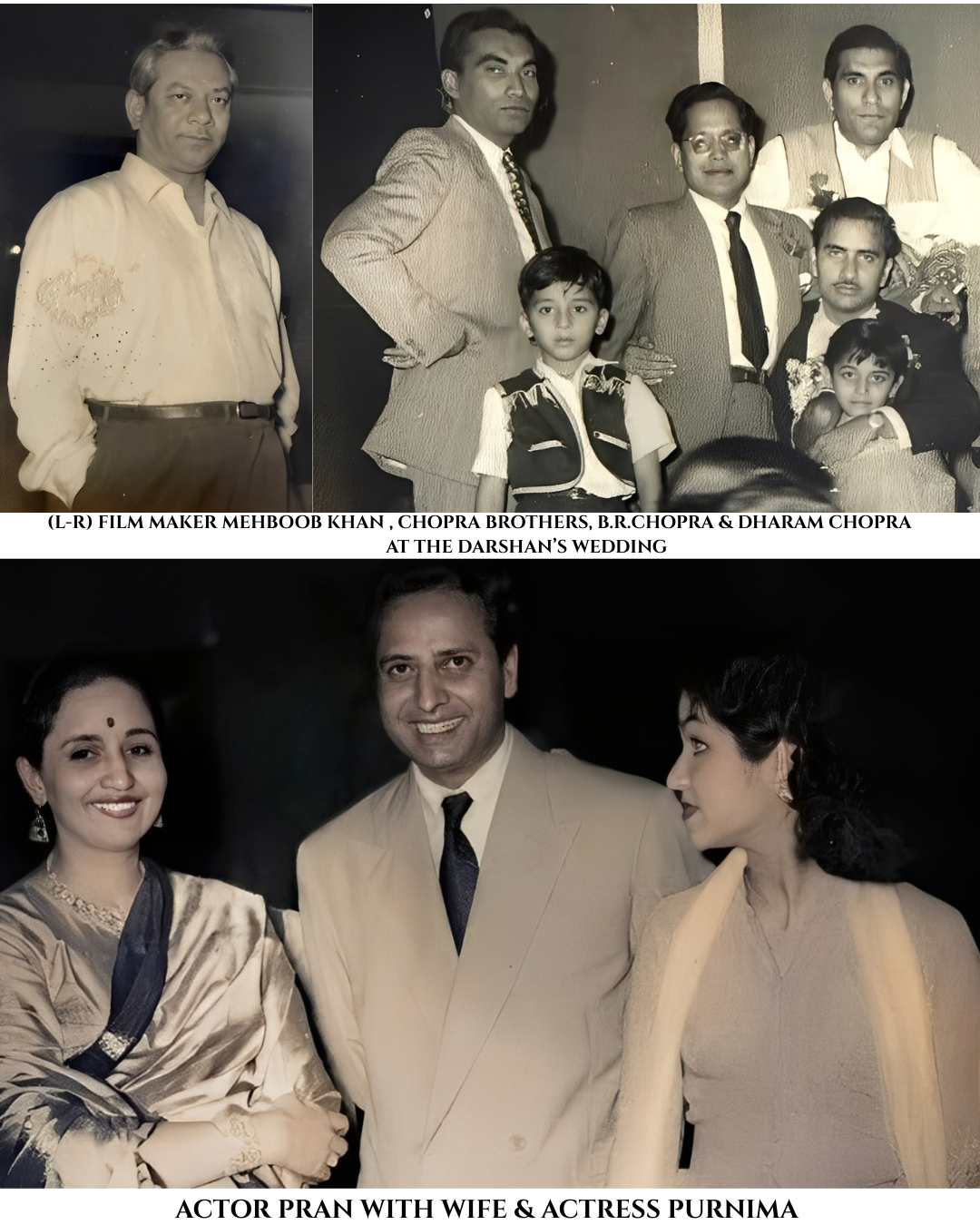
He is also known for representing B. R. Chopra and Dilip Kumar in the famous Dilip Kumar vs. Madhubala case.
Yes! Apart from working with Pancholi Studios, he had made a name for himself as a successful advocate which he pursued once he arrived in Bombay and had an association with topnotch film-makers like Mehboob Khan and B.R. Chopra, among others. This particular case, which was quiet high-profile in nature, was settled out of court. He was known to be an advocate who could do out of court settlements. Interestingly, he played the role of the judge in B. R. Chopra’s ‘Kanoon’ besides also being credited with handling the legal technicals in the film. He passed away at the age of 52 in the year 1962.
As a producer, your father started out by backing some swashbuckling action films that were quite popular those days. He, then produced films like ‘Yeh Raat Phir Na Aayegi’ (1966) and ‘Kahin Din Kahin Raat’ (1968).
He always wanted to make movies. He started his career in cinema when he was in his early 20s and produced ‘Tatar ka Chor’ (1955) and other films. He then signed successful director Nanabhai Bhatt to helm his Ashok Kumar-starrer ‘Ustad’ (1957). Nanabhai and his wife Shirin Bhatt were very impressed with this man who was very hardworking and handsome and therefore, quite suitable for their daughter Sheela. The marriage was solemnised on 1 December, 1957. ‘Ustad’ proved to be a breakthrough. If you see ‘Ustad’ and then, watch Yash Chopra’s ‘Deewaar’ (1975), you will realize the plot of the latter is strikingly similar to the film my father made.
His next, ‘Naya Sansar’ (1959) featuring Pradeep Kumar, Nanda and Jayshri Shantaram had beautiful music by Chitragupt and scripted by top-notch writer Pandit Mukhram Sharma who had written several successful films of those times, including ‘Dhool Ka Phool’ (1959). He followed it up with the Pradeep Kumar-Madhubala starrer ‘Passport’ (1961) which was directed by Pramod Chakravarthy. Unfortunately, Madhubala was unwell and passed away abruptly and they completed the film with a lot of difficulties. That was the time when he faced a major setback. However, his next ‘Samson’ (1964), which Nanabhai Bhatt directed, was a huge success. The film featured Dara Singh, Mumtaz, Feroz Khan and Ameeta. After this film, he never had to look back.
‘Phir Milogi Kabhi’ from ‘Yeh Raat Phir Na Aayegi’ is one of my most favourite songs from the films produced by your father.
Author Avijit Ghosh wrote a book called ‘40 Retakes: Bollywood Classics You May Have Missed’ in which he had mentioned ‘Yeh Raat Phir Na Aayegi’. I remember him telling me how he found a VCD of the film somewhere on Delhi’s streets. He watched the film and felt the urge to write about it.
Your father founded Shree Krishna Films. When you took over the reins, you rechristened it as Shree Krishna International. Did the family have a special connection with Lord Krishna?
We have always been respectful of all Gods, religions and faiths. Since we are Hindus, my father decided to name the company after a Hindu God. After Shree Krishna Films, he also founded Shree Krishna Pictures, a film distribution company.
Shree Krishna Pictures would mostly distribute Hindi films in the CP-CI circuit.
Yes, that’s right!
One can see a glimpse of the kind of bond you shared with your mother through some of the posts and pictures you have shared on social media over the years.
My mother Sheela Darshan was the first child of Nanabhai Bhatt. Mahesh and Mukesh Bhatt were her brothers. Robin Bhatt was her step-brother. Her siblings were much younger to her. She was a progressive woman and very fond of cinema. My parents were not the kind of people the media often spoke about. However, they had strong connections. My mother was not an active participant in the making of films. However, a lot of film people, who were very renowned, had high respect for her and her knowledge of cinema. People like Mr. Manoj Kumar and O. P. Nayyar would speak highly of my mother’s knowledge of and taste in cinema. She was all cinema herself. That’s how I got interested in cinema. I could not see myself anywhere else other than cinema. She would make me watch films that she thought were good. I watched a lot of films made in the ‘60s and ‘70s because of her. I remember watching ‘Mere Mehboob’ (1963) when I was 3 or 4 years of age. She introduced me to films made by Guru Dutt. My father did not want his children to get into cinema. He wanted us to be educated and qualified for greater positions. My mother, however, sensed her boys had an aptitude for cinema and she always encouraged me and my brother.
Was your father against the idea of you and your brother Dharmesh working in the film industry because of the uncertainty associated with it?
He had seen the ups and downs. He had also seen how people and their behaviors change every Friday. He thought cinema has to be done for entertainment and business. He felt doing something creative in those times was tough. He knew the world of cinema and was familiar with all the challenges associated with it.
The one thing that makes me feel proud is that I inherited his sense of values. I was hugely influenced by the cinema of Mr. Manoj Kumar and Mr. Raj Kapoor. I loved the cinema of the ‘60s. People were making very good cinema then. I still remember vividly the kind of emotions I went through while watching ‘Mother India’ (1957) and experiencing ‘Mughal-e-Azam’ (1960). Apart from my father, I had several relatives working in films. Every little trip to the cinemas left an impression on me. I always thought I could start making movies. To be honest, I came in too late in this business.
What kind of bond did your parents share with each other?
The beauty of that husband-wife relationship was that the both of them understood cinema. Their zones and perceptions may have been different but they were extremely passionate about the medium. My father had a long journey in cinema as a producer, distributor and technician. My mother was a homemaker. The woman’s support was tremendous. She was always there to encourage not just my father and her children but any person who looked for help and encouragement.
What kind of parents were they to you?
My father was not a strict man. He never raised his hand on me. My mother was a little strict. She studied in a convent school and was a Bombay girl. Her educational levels and exposure were higher than my father. She was a very progressive thinker. She was a very emotional human being. My father’s emotion was connected to cinema. He was never the media’s darling. His contributions went unsung. He never had a PR in his life. He never feel the need for it. His contribution to cinema was tremendous. His equipment collection was rare. Back then, the import duty was more than 300 per cent. It was not a money making business for him. However, many in the industry benefitted from it. Participation in cinema is what mattered to him. All the big films made in the ‘70s, ‘80s and ‘90s had his involvement either as a distributor, financier or an equipment provider. In some way or the other, he was there. Despite all that he did, he never wanted to be written about.
How did your parents react when you told them you wanted to pursue a career in filmmaking?
I took one step at a time. By the time, I produced my first film, they had gotten used to the idea. I started off in the distribution and exhibition sector. The final destination was filmmaking. I had to take a circuitous route towards it. Filmmaking was destined for me. Everything I did prior to becoming a filmmaker was a wonderful learning experience for me. My cinema always had a lot of appeal with the masses. Imagine, I was a boy from Bombay Scottish School who was making films which resonated not just with the multitudes across India but worldwide too.
You grew up in Bombay (now, Mumbai). How did you understand the sensibilities of the audience residing in smaller towns and cities?
A few months ago, somebody asked me which is that one film which impacted me the most, I named ’36 Chowringhee Lane’ (1981). Sometimes, the films you personally like and the ones you make could be very different. I had to reach the lowest common denominator amongst the audiences. I wanted my cinema to connect with the common man. I was not a media favourite. However, our cinema was and continues to be celebrated by the common man.
Once I started working in the exhibition and distribution sector, I spent 7-8 years in Indore. The ‘80s were all about learning and understanding what the perceptions were. I had the chance to visit several small towns and villages and interact with people residing there. Cinema then was about entertainment. You would find all the nava rasas in cinema. For me, that was cinema. Even today, I perceive it like that.
Which is that one trait in your parents, individually, which inspired you the most?
My father was a very humble man. His humility has been a great source of inspiration for me. My mother had a tremendous contribution to everything I managed to do in life. She would always encourage and support me in everything I would try to do. So many people in the film industry would like to interact with her as she was an extremely positive, hopeful, supportive and encouraging person.
How do you remember your parents today?
I am extremely grateful to both my parents for everything they gave me. They gave me emotions, positive thinking, cinema and this inheritance I have. They shall always live within me. I hope I can keep making them proud. My father always told me it is important to be a good human being first. Only then, you can make good films.
Publisher: Source link
Prahaar – The Ujjwal Nikam Story Review

皇马锋线重组方案曝光姆巴佩去留将如何重塑球队进攻格局 – OD体育